

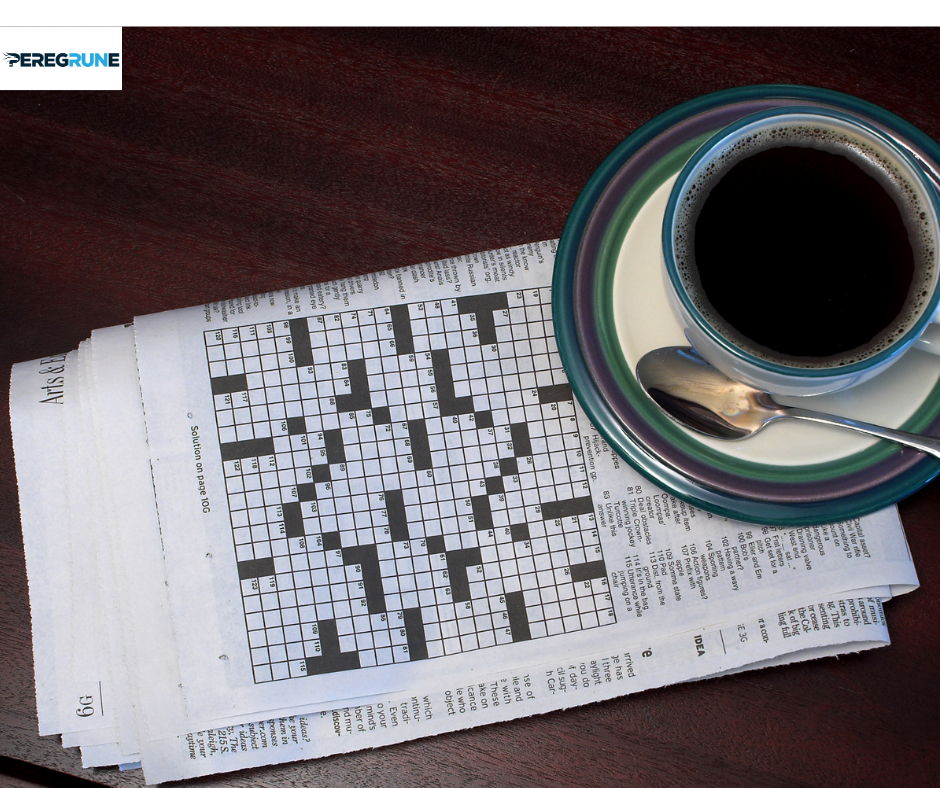
At first it looks impossible. White and black squares stacked like a tiled kitchen floor. So many empty spaces. So many clues.
For decades, that’s how I thought about crossword puzzles — specifically the New York Times crossword. That puzzle, especially the Sunday edition, sat on my personal bucket list. During COVID I started dabbling with crossword. Fortunately most newspapers now have digital versions, which makes solving easier — especially for someone like me who tends to make mistakes and has questionable handwriting.
Over time I learned something: crossword puzzles have patterns. The Monday puzzle is the easiest. Tuesday through Thursday gradually get harder, often introducing themes and trickier wordplay. The hardest puzzle actually isn’t Sunday. It’s Friday. Friday puzzles are devious. The clues are rarely straightforward and often rely on clever misdirection. The weekend puzzles are challenging mostly because of their size — more squares, more clues. The Sunday puzzle is large but designed to be approachable for the broader newspaper audience.
There’s also a language to crosswords. The puzzle writers — called constructors — follow certain conventions. Once you start recognizing them, the clues become easier to decode.
You start to notice plurals. “IER” and “IEST” endings. Clues that hint at puns or turns of phrase. Phrases of speech. Others that are straightforward, almost like a Jeopardy question. After enough puzzles, you start to read the language.
This past week, for the first time, I solved every New York Times crossword from Monday through Sunday. Bucket list item: complete.
I still need help. Some words I’ve never heard of. Proper names from old movies or opera performances still stump me. But that’s fine. I’m not trying to win a competition. It’s just a fun challenge, something that keeps the brain sharp and gives me a pleasant distraction for a few minutes during the day.
From the emails many of you send me, I know some of you once had a running bucket list item too.
Run a 5K.
Finish a marathon.
Ultra.
Just getting off the couch and start.
At first it felt impossible. But eventually you learned the patterns. The rhythm of training. The language of running — easy days, long runs, workouts, recovery. What once looked impossible becomes familiar. The grid fills in.
So here’s a clue for you:
Clue: A runner’s long-term training secret (11 letters)
Take a guess.
Best wishes on chasing your running goals,
George